
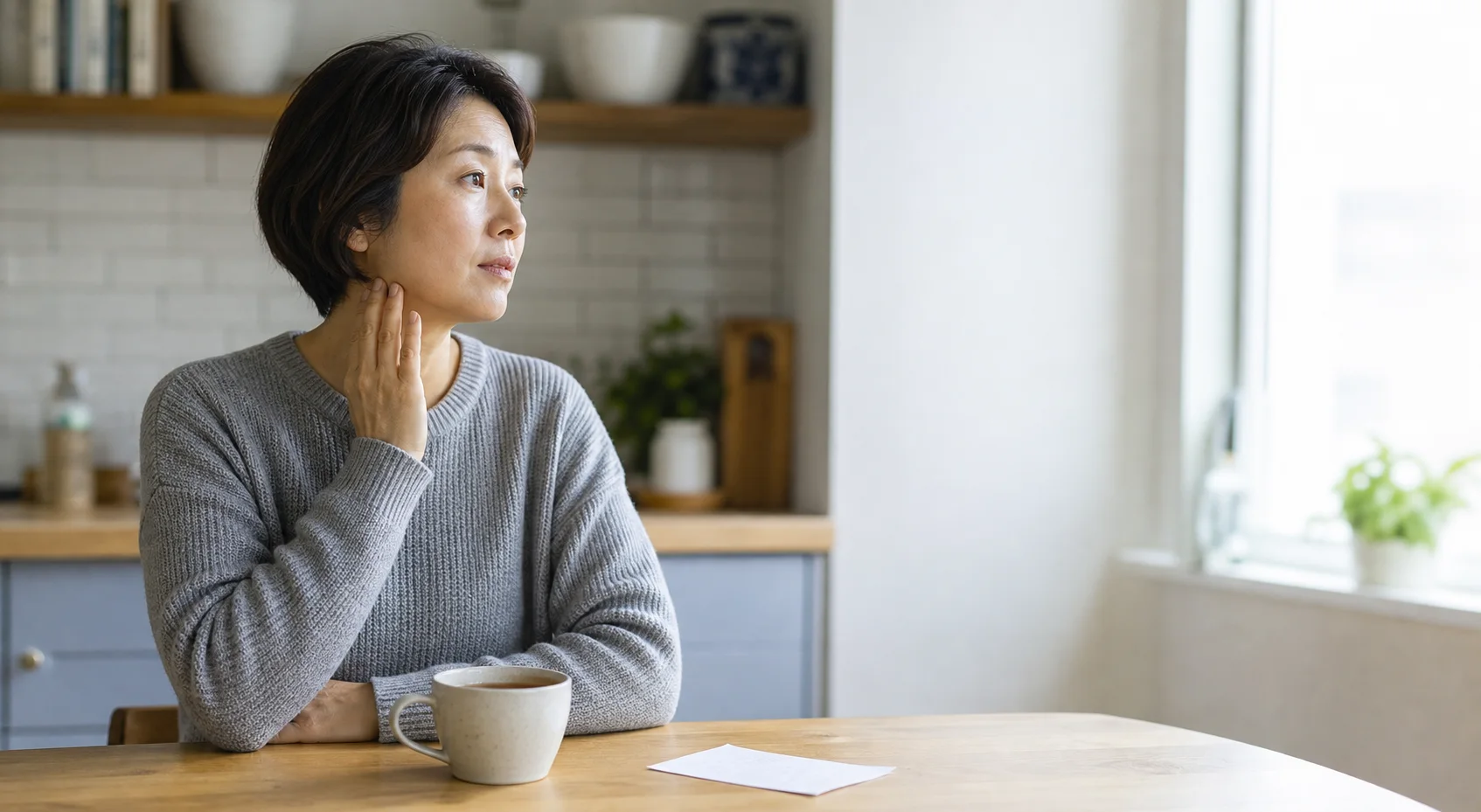
People often call them “swollen glands,” but the small lumps in the neck, under the jaw, armpits and groin are usually lymph nodes. They are part of the immune system and can enlarge while they respond to an infection or inflammation nearby. A sore throat, dental problem, ear infection, skin infection or viral illness can all fit that picture. At the same time, a lump cannot be safely diagnosed from its location, tenderness or size at home. The useful next step is to look at the whole pattern: what changed, what symptoms are nearby and whether the node is settling or progressing.
Short answer: a new tender lymph node during an obvious cold or throat infection often improves as the illness resolves, though the node may take longer to return to its usual size. Arrange medical advice if it is getting bigger, does not improve over the next few weeks, feels hard or fixed, appears near the collarbone, or comes with night sweats, unexplained weight loss, persistent fever or no sign of an infection. Get urgent help for trouble breathing or swallowing, or for a rapidly worsening red, hot, very painful area with fever.
What lymph nodes do and where they are felt
Lymph nodes filter lymph fluid and help the body recognize and respond to germs and other foreign material. They sit in groups rather than as one long chain. Many people can feel small nodes in the neck, beneath the jaw, behind the ears, in the armpits and in the groin even when well. What matters is whether there is a clear change from your usual body, a new group of nodes, or a lump that persists.
The site can offer a clue, but not a conclusion. Nodes in the neck or under the jaw may enlarge with an infection in the throat, tonsils, ears, mouth or teeth. An armpit node can react to an infection or inflammation in the hand, arm, chest or breast area. Groin nodes can respond to problems in the legs, feet, lower abdomen or genital area. This is anatomy, not a diagnosis map: the same location can have many causes, and some conditions affect more than one area.
Try not to repeatedly poke or measure a node throughout the day. Frequent pressing can keep an already tender area sore and makes it harder to judge a real trend. Instead, note the date you first noticed it and compare only occasionally. A node that was painful at the start of a cold may remain slightly noticeable after the cold has gone; that is different from a lump that is steadily enlarging or appearing without any infectious symptoms.
Patterns that can guide a medical conversation
Most enlarged lymph nodes are linked to an infection, but “most” is not a guarantee for an individual. The table helps you organize observations. It does not sort a lump into “safe” or “dangerous,” and it should not replace an examination.
| What you notice | Examples a clinician may consider | Helpful detail to record |
|---|---|---|
| Tender node with a recent sore throat, cough, dental pain, ear pain or skin infection nearby | A local viral or bacterial infection, dental or skin inflammation, and other nearby causes. | When the other symptoms started, fever, skin changes, dental symptoms and whether they are improving. |
| Nodes in more than one area | A whole-body infection such as glandular fever, immune conditions, medicine effects and other causes. | Fatigue, rash, fever, travel, new medicines, immune-suppression and relevant exposures. |
| One lump that is painless, getting bigger or not moving much under the skin | A range of causes, including conditions that need timely examination. | How long it has been present, whether it is changing and any history of cancer or immune problems. |
| Swelling near the collarbone or unexplained swelling without illness symptoms | A reason for a clinician to assess rather than simply wait at home. | Exact location, associated cough, breathlessness, appetite or weight changes and fever. |
| Red, hot skin, marked tenderness or drainage over a node | A possible local infection of skin or lymph node that may need prompt treatment. | Fever, how quickly it changed, a cut, bite, scratch or wound nearby, and any pus or red streaking. |
Why tenderness and texture do not settle the question
A tender node is often associated with inflammation or infection, and a painless node can occur for many harmless reasons. Conversely, tenderness does not rule out every important condition, and a painless lump does not establish cancer. Descriptions such as “rubbery,” “hard” or “movable” are useful information for a clinician who can examine the area in context; they are not a reliable self-test. MedlinePlus advises contacting a clinician when nodes keep enlarging, have not become smaller after several weeks, are red and tender, or feel hard, irregular or fixed.
Symptoms that matter alongside a lump
Think beyond the neck. Record a very high temperature or repeated fever, drenching night sweats, unexplained weight loss, unusual fatigue, itch without a clear rash, shortness of breath, a persistent cough, easy bruising or repeated infections. These symptoms are not specific to lymphoma and frequently have other explanations. They are still important to mention because the NHS and NCI list a painless swelling together with symptoms such as fever, drenching night sweats and unexplained weight loss as reasons for assessment.
What to do while you observe a recent infection
If a tender node appears with a familiar, mild infection and you are otherwise improving, it may be reasonable to watch the overall recovery for a short period. Rest, fluids and usual symptom care for the underlying illness can be appropriate. The node may shrink more slowly than the sore throat or cold symptoms. Set a clear point to reassess rather than repeatedly worrying without a plan: is the illness resolving, is the lump smaller or at least not growing, and have any red flags appeared?
Do not use leftover antibiotics, someone else’s antibiotics or supplements marketed as “lymph cleanses.” Antibiotics do not treat viral infections, and the cause of a swollen node needs to be established before any prescription is chosen. Avoid squeezing, massaging aggressively or trying to drain a lump. A red, hot, painful area with fever or pus needs timely medical assessment instead of home procedures.
Children are not simply small adults. Lymph nodes can be more noticeable in children, particularly around infections, but a child who is very unwell, has difficulty breathing or swallowing, persistent high fever, unusual bruising, poor drinking, severe pain or a rapidly changing lump needs prompt clinical advice. A parent or caregiver should use the child’s usual paediatric or urgent-care service rather than applying an adult watch-and-wait rule.
How to prepare for an appointment
A short, factual timeline is more helpful than a detailed theory about what the lump “must” be. Write down the first date you noticed it; the exact area; whether there is one lump or more; whether it is changing; pain, redness or warmth; and any infection symptoms in the nearby part of the body. Add a list of medicines and supplements, recent infections, dental work, skin injuries, animal scratches or bites, travel, new sexual-health risks if relevant, known immune conditions and a personal history of cancer.

A clinician may examine the node and the body area it drains, ask about symptoms and decide whether observation, a urine or throat test, blood tests, imaging or a referral is appropriate. A biopsy is not the starting point for every swollen node. MedlinePlus notes that it may be used when nodes do not go away or when other assessment has identified an abnormal node. The tests chosen depend on the history and examination, not on a single feature read online.
It is okay to ask practical questions: “What do you think is most likely?” “What change means I should contact you sooner?” “When should we reassess if it does not settle?” and “Do any of my medicines or health conditions change the plan?” Those questions make a period of observation active and safer rather than passive waiting.

When to seek prompt or urgent care
Arrange a medical appointment promptly for a node that is getting larger, remains after several weeks, feels hard or fixed, appears above or below the collarbone, or is present without a clear infection. Seek prompt advice when it is accompanied by persistent fever, drenching night sweats, unexplained weight loss, marked fatigue, widespread swelling, or a new lump in someone with a weakened immune system or previous cancer.
Seek urgent care now for difficulty breathing, very difficult or painful swallowing, rapidly increasing neck swelling, or a severe allergic reaction. A red, hot, very painful area with fever, pus or red streaking also needs urgent assessment because a skin or lymph-node infection can worsen. Call emergency services for severe trouble breathing, severe chest pain, fainting, confusion or other signs of immediate danger.
Frequently asked questions
How long can a lymph node stay enlarged after a cold?
A node may take longer to settle than the cold itself. The important trend is improvement rather than steady growth. If it has not become smaller after several weeks, keeps growing or comes with red flags, arrange medical advice.
Can I tell from the location whether a swollen node is serious?
No. Location can help a clinician look for infections or other issues in nearby areas, but it cannot diagnose the cause. Nodes near the collarbone and unexplained persistent lumps deserve particular assessment.
Should I take antibiotics for swollen glands?
Not without a prescription for a diagnosed bacterial infection. Many swollen nodes occur with viral illnesses, and antibiotics do not treat viruses. Using leftover or another person’s antibiotics can delay correct care and cause harm.
Does a painless swollen lymph node mean cancer?
No. Painless lumps have many possible causes. A painless lump that persists, grows, feels fixed or is joined by night sweats, unexplained weight loss or fever should be checked, but these signs do not diagnose cancer on their own.
Can I massage a swollen lymph node to make it go down?
Do not try to massage or drain a lump aggressively. It can irritate a tender area and does not treat the cause. If the skin is red, hot, very painful or draining, seek medical advice promptly.
Sources reviewed
- MedlinePlus Medical Encyclopedia: Swollen lymph nodes
- NHS: Swollen glands
- NHS: Symptoms of non-Hodgkin lymphoma
- National Cancer Institute: Non-Hodgkin Lymphoma Treatment (PDQ) – Patient Version
- MedlinePlus Medical Encyclopedia: Lymph node biopsy
- MedlinePlus Medical Encyclopedia: Lymphadenitis
- NHS: Glandular fever


You made some decent points there. I checked on the web to find out
more about the issue and found most people will go along with your views on this web site.