
More than 9,500 people have died from COVID-19 in Colorado. The lab has examined 2.9 million tests. Last week, they discovered the first case of the Omicron variant tied to an Arapahoe County woman who had been in Southern Africa.
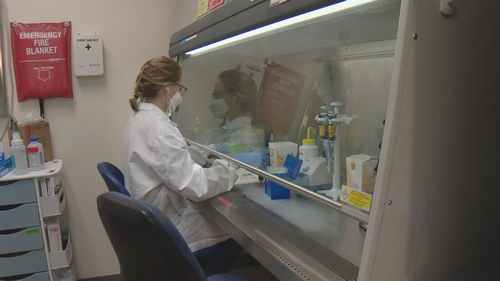
Inside the Colorado Department of Public Health Laboratory Building, they are hunting for a possible killer. That killer is the coronavirus known as COVID-19.
Emily Travanty is the state laboratory director says, “This person experienced complaints and sought testing and the result of that test, which was not done here, once the results came back into the state reporting system, Tri-County and CDC epidemiologists flagged.”
The second case was discovered elsewhere tied to a Boulder County man who had also traveled in Southern Africa.
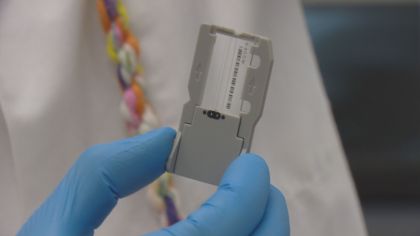
The positive results here are rendered safe to handle and given a tag to identify the person with the sample.
Then comes what’s called sequencing to determine the variant. The positive samples are put in high-tech machines nicknamed Lucille, the other is called Buster. When the data came back, it showed Omicron was here in Colorado.
Travanty added, “I think we are always surprised with something new but this sample was from a patient who had a travel history that was already flagged by the WHO and CDC as being a risk factor for the Omicron variant.”
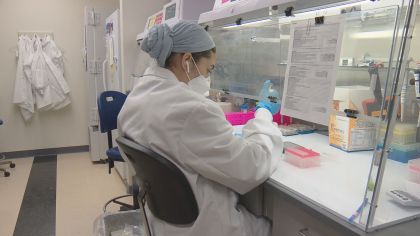
Tri-County Health and the state lab examined the sample more closely and confirmed the Omicron variant.
“Wearing a mask, vaccination, as well as social distancing, are our best line of defense,” Travanty added.
She says they also checking past tests to see if Omicron may have arrived earlier. In this often thankless job, words of thanks are posted on the wall, calling them heroes for their work.
CDPHE Tracking Omicron In Boulder County Wastewater
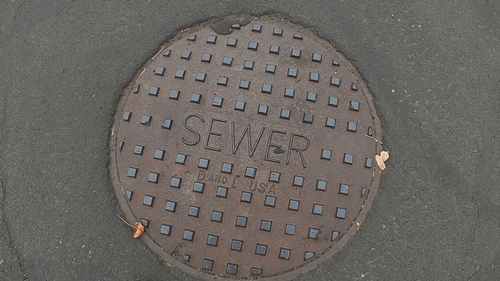
More than 20 wastewater facilities in Colorado are now voluntarily providing samples for the state’s COVID-19 surveillance program.
“One of the ways we use our wastewater surveillance data is to identify how much COVID, and if there’s variant COVID in a community,” Rachel Jervis said.
Jervis is an Epidemiologist for Colorado Department of Public Health and Environment. She helps analysis the samples coming into the state lab.
Their work recently uncovered signs of the omicron variant likely spreading in Boulder County.
“With omicron for example we are early in omicron detection. Our lab has been able to detect it for just over a week now, so we don’t have a lot to compare it to. However, seeing it in wastewater at the same time we are only seeing it in one human case in that community indicates that it is likely there is some low-level community transmission happening,” Jervis said.
Using wastewater to monitor the virus isn’t new, but knowing what to look for as the virus mutates, she says, is always changing.
“This is an area where are lab technology is incredibly nimble. Within 48 hours of omicron our lab was able to change their protocols to detect omicron in wastewater,” she said.
While any spread of a new and unknown variant is concerning. Jervis says it was expected, and that Coloradans should be reassured by the state’s ability to do a variety of testing that can quickly identify changes in the virus.
“We have the best information to make the best recommendations and make the best decision sin our state and to protect our communities,” Jervis said.
You can see if your county is part of the state’s wastewater surveillance program and the information they’ve collected.


