
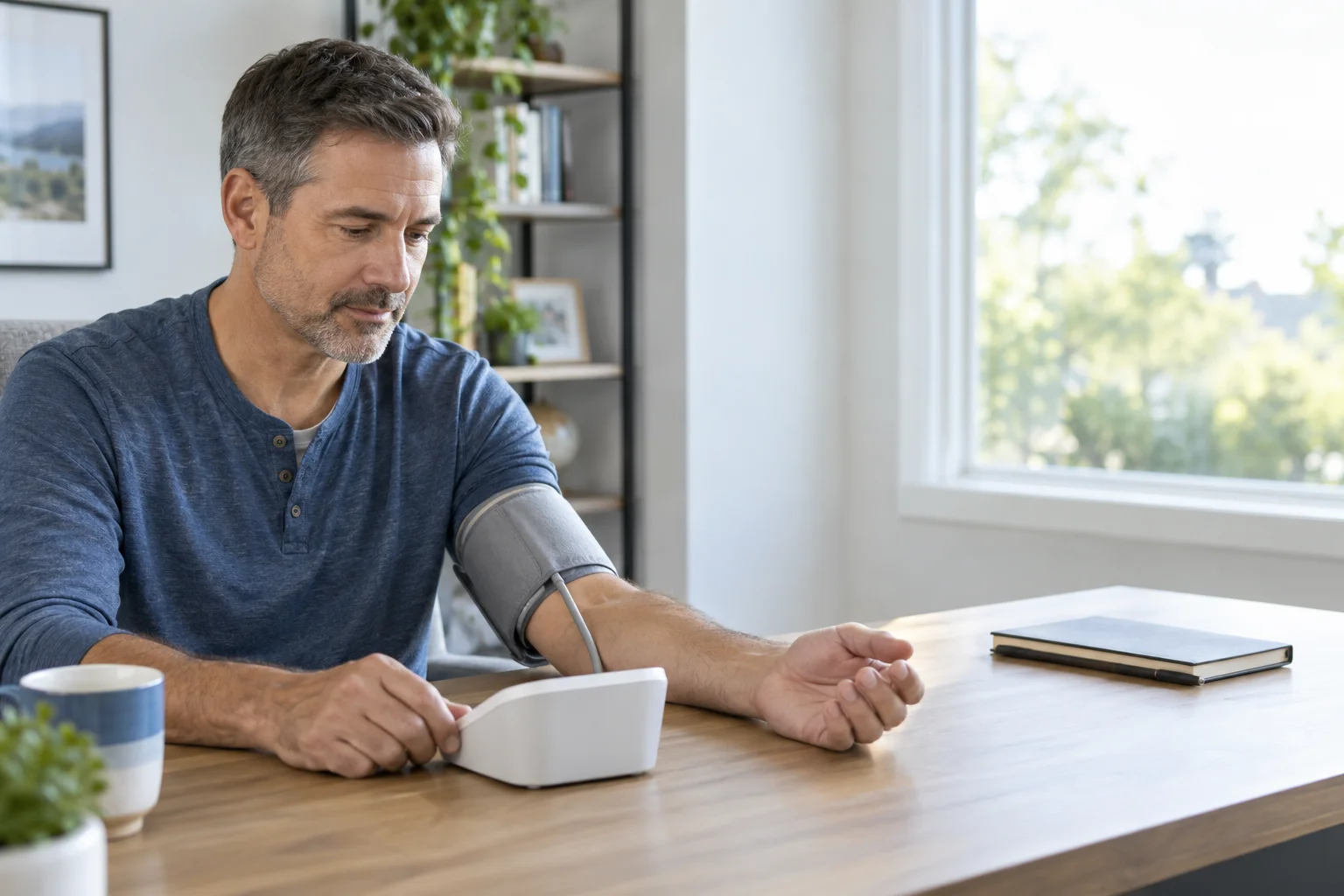
Blood pressure comes as a pair. The larger number, systolic pressure, reflects pressure while the heart contracts. The smaller number, diastolic pressure, reflects pressure between beats. Pulse pressure is the gap between them. This pulse pressure calculator subtracts the lower number from the upper number and can compare a second measurement from the same person.
A calculated difference can be useful to record or discuss at a visit. It cannot identify a cause, establish a diagnosis or choose treatment. Its meaning changes with the actual systolic and diastolic values, age, symptoms, measurement technique, pregnancy, medicines and health history. Keep the original reading beside the result.
Pulse pressure calculator
Enter a complete blood pressure reading in mm Hg. Add a second reading only when you want a side-by-side comparison.
The pulse-pressure formula
The formula is short:
Pulse pressure = systolic blood pressure – diastolic blood pressure
For a reading of 120/80 mm Hg, the pulse pressure is 40 mm Hg. For 138/82 mm Hg, it is 56 mm Hg. The calculator handles the arithmetic; the two source numbers remain the important part of the record. A result of 40 does not mean the person with that reading is risk-free, and a larger result does not tell you why the difference occurred.
The American Heart Association’s scientific statement on blood-pressure measurement describes pulse pressure as one of several values derived from systolic and diastolic readings. In routine care, clinicians usually start by evaluating the actual blood pressure pair and the wider clinical picture. A home calculator can organize a question for that conversation. It cannot replace it.
Why the difference can vary from one reading to another
Pulse pressure changes whenever the upper or lower number changes. A rushed measurement after coffee, exercise, smoking, alcohol, a full bladder or a stressful call can produce a reading that does not represent your resting state. Position matters too. Unsupported feet or back, crossed legs, an arm below heart level, talking or a cuff placed over clothing can affect the result.
For home monitoring, the CDC recommends using a log, measuring at the same time each day and taking at least two readings one or two minutes apart. The American Heart Association recommends an automatic upper-arm cuff monitor, quiet rest for at least five minutes and two readings one minute apart. When two readings differ, record both rather than selecting the smaller gap.
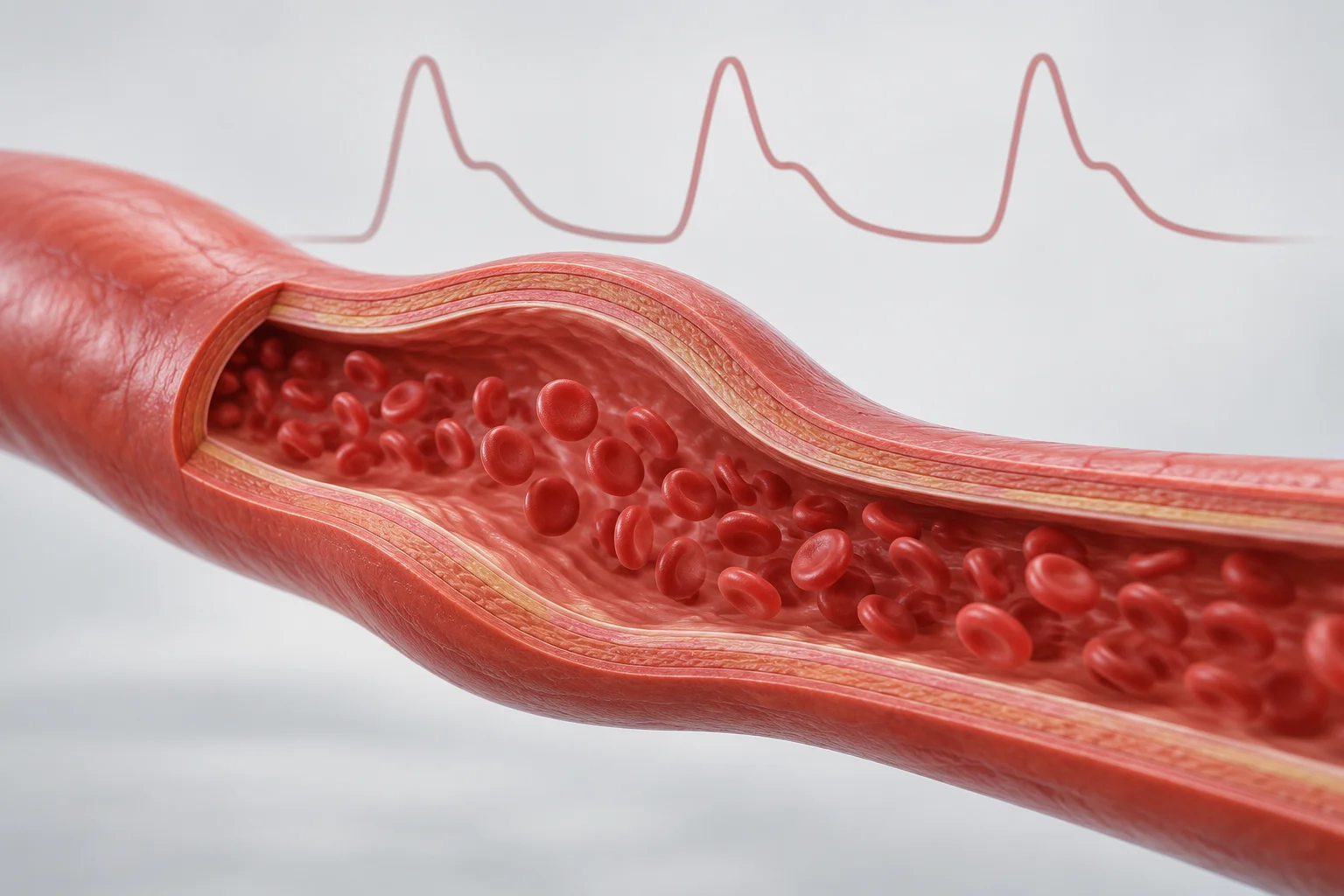
What does “wide pulse pressure” mean?
People often search for a single number that separates a wide pulse pressure from a usual one. Clinical research does not support using one home cut-off as a diagnosis. Pulse pressure tends to increase with age as large arteries become less elastic. A wide difference can also appear for many other reasons, including the combination of a high systolic number and a lower diastolic number. A clinician considers the full pattern, including the absolute pressure values and whether the change is new.
A peer-reviewed clinical review describes pulse pressure as roughly 40 mm Hg in a conventional 120/80 example and stresses that the level at which a difference becomes clinically relevant varies by disease state and context. The same review discusses associations between wider pulse pressure and cardiovascular risk in some populations. Association is not a personal forecast. It does not mean a calculator can identify arterial stiffness, valve disease or another cause from a reading at home.
Use the result as a record, not a label. Write down the complete blood pressure pair, the date and time, whether it was the first or second reading, and anything that may have affected the measurement. A clinician can then see the numbers that produced the difference.
Take a reading worth calculating
- Choose a validated automatic upper-arm monitor with a cuff that fits your upper arm.
- Avoid smoking, caffeinated drinks and exercise for 30 minutes. Empty your bladder.
- Sit with your back supported, feet flat and legs uncrossed. Rest quietly for at least five minutes.
- Place the cuff on bare skin and support the arm at heart level. Remain still and quiet.
- Take a second measurement after one or two minutes and record both complete readings.
Bring the monitor to an appointment occasionally. A healthcare professional can check cuff size, placement and agreement with office equipment. Device lists can help, although availability and validation differ by market and by exact model. A familiar brand name alone does not prove that a particular model is validated.
Read the pair before reading the gap
Two measurements can produce the same pulse pressure while raising very different questions. A reading of 120/80 mm Hg and one of 160/120 mm Hg both have a difference of 40 mm Hg. The arithmetic matches; the blood-pressure readings plainly do not. That is why a pulse-pressure result should always travel with the two numbers that created it.
The reverse can happen too. A larger gap may arise because the systolic number rose, because the diastolic number fell, or because both moved. A calculator cannot sort those possibilities into a cause. For someone keeping a home log, the useful details are more ordinary: date, time, cuff used, whether the person had rested, the two readings taken in that session and any symptoms. Those notes make a repeated pattern easier for a clinician to assess than a collection of isolated gaps.
Home readings vary. One unusual result after a poor night’s sleep, a hurried walk up the stairs or a badly positioned cuff is a reason to slow down and measure properly, not a reason to invent a diagnosis. A result that keeps changing after careful repeated measurements belongs in a routine clinical conversation. People who are pregnant, have known heart or kidney disease, or have been given individual home-monitoring instructions should follow the plan from their own care team.
Use the comparison feature carefully
The optional second reading is meant for a quick comparison, such as the first and second measurements in one resting session. It reports the change in calculated pulse pressure. It does not determine whether a change is significant. Small variation can happen naturally. A repeated or striking change deserves a look at technique and a discussion with a clinician, especially when it comes with symptoms or a change from your usual pattern.
For a seven-day home series or a longer graph, use the site’s Home Blood Pressure Average Calculator or Blood Pressure Log and Trend Tracker. Those tools preserve the measurements behind an average or trend.
When calculation should stop
Pulse pressure is not an emergency screen. If a blood pressure reading is higher than 180/120 mm Hg, the American Heart Association advises waiting at least one minute and repeating it. If it remains that high, contact a healthcare professional immediately. Do not use a calculator result to decide whether to wait, change a prescribed dose or take someone else’s medicine.
Call local emergency services when a reading above 180/120 mm Hg occurs with chest pain, shortness of breath, back pain, numbness, weakness, change in vision or difficulty speaking. Seek emergency help for severe symptoms even when no blood pressure reading is available. The urgent concern comes from the full situation, not the calculated gap.
Frequently asked questions
Is pulse pressure the same as pulse or heart rate?
No. Pulse pressure is the numerical difference between systolic and diastolic blood pressure. Heart rate or pulse is the number of heartbeats per minute.
Can I calculate pulse pressure from a wrist monitor?
The calculation still subtracts one displayed number from another. The concern is measurement quality. For most people, an appropriately fitted validated upper-arm monitor is the more reliable choice for home readings.
What should I do with a new large difference?
Check the measurement conditions, rest and repeat according to the home-monitoring advice from your clinician. Record the full pair of readings. Seek urgent help for very high blood pressure or concerning symptoms.
Can pulse pressure tell me whether my arteries are stiff?
No. Pulse pressure can be associated with arterial stiffness and cardiovascular risk in some settings, yet it does not directly measure either one. Diagnosis and risk assessment need clinical context.
Sources reviewed
- American Heart Association: Home blood pressure monitoring
- CDC: Measuring your blood pressure
- American Heart Association: Measurement of blood pressure in humans
- Wide pulse pressure: a clinical review


