
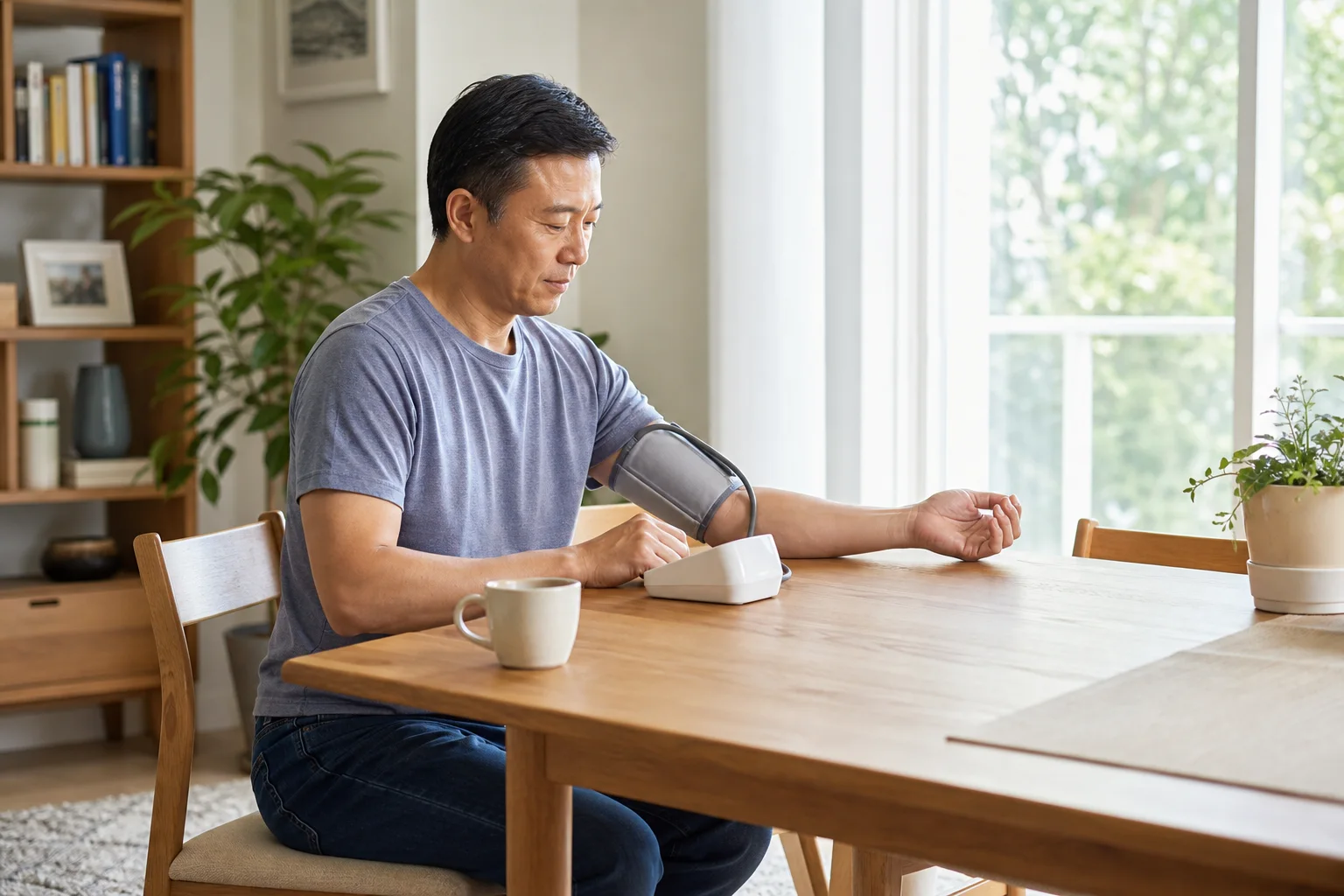
Seeing a higher-than-expected number on a home blood-pressure monitor can be unsettling, especially when you feel well. The number matters, but so do the circumstances: a rushed measurement after coffee, a cuff over clothing, a full bladder, talking, worry, exercise or an ill-fitting cuff can all distort a reading. A single number is a snapshot. A careful repeat and a short series of well-recorded measurements give a clinician far more to work with.
Short answer: If a home reading is higher than expected but you have no emergency symptoms, sit quietly, check the technique and repeat it after at least one minute. Record both results rather than trying to force the number down. Do not take an extra dose, stop prescribed medicine or borrow someone else’s medicine because of one reading. A reading above 180/120 mm Hg that remains that high after a repeat needs immediate clinical advice; if it comes with chest pain, breathlessness, new weakness or numbness, vision change, confusion, difficulty speaking, severe headache or severe back pain, call local emergency services.
What to do after one high reading
A reading should be interpreted in context, not in isolation. If you have just climbed stairs, exercised, smoked, had caffeine or alcohol, argued, rushed in from outside, talked during the measurement or need the toilet, the result may not represent your resting blood pressure. The right response is usually a reset, not a reflex.
- Pause and screen for symptoms. If you have chest pain, severe shortness of breath, fainting, a new neurological symptom or another sign of acute illness, skip home troubleshooting and seek urgent care.
- Prepare for a true resting measurement. Empty your bladder; sit in a quiet, comfortably warm place with your back supported and both feet flat. Do not cross your legs. Rest for about five minutes without talking.
- Check the setup. Place a correctly sized upper-arm cuff on bare skin. Support the arm on a table at heart level. Keep still and silent while the monitor runs.
- Repeat once. Wait at least one minute and take a second reading. Write down the date, time, both numbers, pulse if your monitor provides it, and anything unusual that could explain the result.
This approach is not meant to dismiss a high number. It is how you turn an anxious moment into information a clinician can actually use. The American Heart Association and CDC both stress that one unexpectedly high reading should be repeated, while a pattern of readings over time is more informative than a single measurement.
When a high number needs emergency help
Very high blood pressure can occur with or without symptoms. The American Heart Association advises repeating a reading above 180/120 mm Hg after at least one minute. If it remains that high, contact a clinician immediately for guidance. The presence of symptoms changes the urgency.
| Situation | Reasonable next step | Do not do this |
|---|---|---|
| One higher-than-usual reading, no alarming symptoms | Rest, repeat correctly, and record both readings. | Do not double a prescribed dose or start a medicine from someone else. |
| Repeated readings remain above your usual range over days | Arrange a routine review and bring the log and monitor if possible. | Do not decide on a diagnosis from a single home session. |
| Repeated reading above 180/120 mm Hg, no symptoms | Contact a clinician promptly for immediate advice. | Do not wait days for a routine appointment without asking what to do. |
| Above 180/120 mm Hg with chest pain, shortness of breath, new weakness/numbness, vision or speech change, confusion, severe headache or severe back pain | Call local emergency services now. | Do not drive yourself if you have neurological symptoms, chest pain or severe unwellness. |
Pregnancy and the period after delivery deserve an even lower threshold for contacting maternity or urgent-care services when blood pressure is elevated or when there is severe headache, visual disturbance, upper abdominal pain, sudden swelling, breathlessness or feeling acutely unwell. This article cannot set a personal pregnancy action plan; follow the instructions from your maternity team.
Why technique can change the result
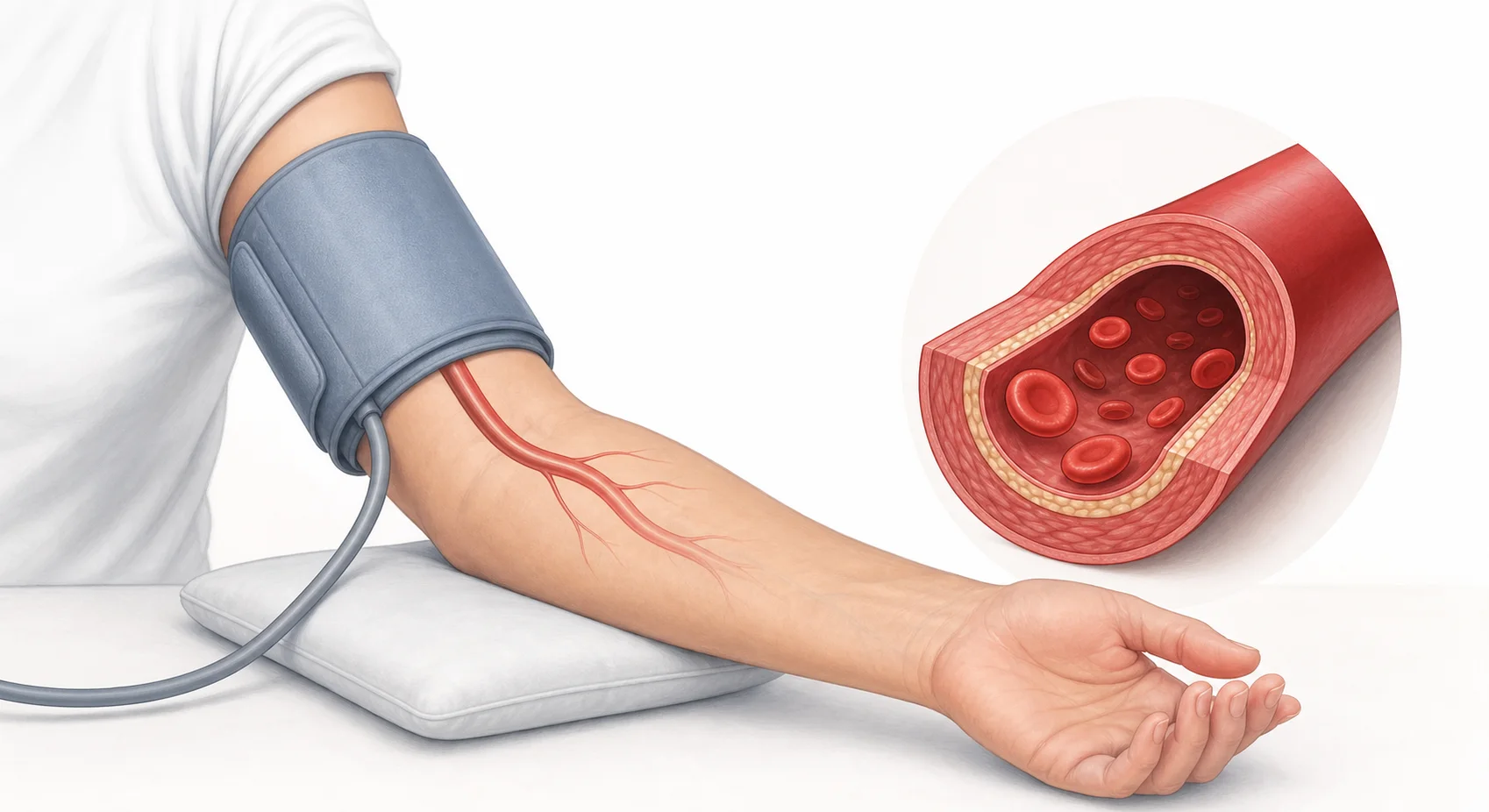
Home monitoring is valuable precisely because it can capture blood pressure away from a stressful clinic setting, but it is not automatic truth. The cuff, body position and routine matter. CDC guidance notes that caffeine, alcohol, smoking and exercise within 30 minutes can raise a result. Talking, unsupported back or feet, crossed legs and an arm hanging below heart level can also make the number less reliable.
Choose the device before trusting the data
For most adults, an automatic upper-arm cuff is preferred over a wrist or finger monitor. The cuff must fit your arm: a cuff that is too small or too large can produce a misleading result. Look for a device that has been clinically validated, rather than relying on marketing language such as “medical grade.” ValidateBP and national hypertension organisations maintain device lists for some markets. Availability differs by country, so it is better to verify the exact model than to assume a familiar brand is validated in every version.
Bring the monitor to a visit
A useful practical step is to take your monitor to a clinic appointment and ask the team to compare its technique and readings with their equipment. This can uncover a wrong cuff size, a placement mistake or a device problem. Replacing batteries, following manufacturer maintenance instructions and keeping the tubing uncrowded are small details that protect the quality of a long-term log.
How to keep a log a clinician can use
A diary is not a scorecard. Its job is to show a pattern: when readings are taken, whether they are consistently raised, whether treatment is working and whether numbers differ between mornings and evenings. It should include the conditions of measurement, not just the best result from the day.
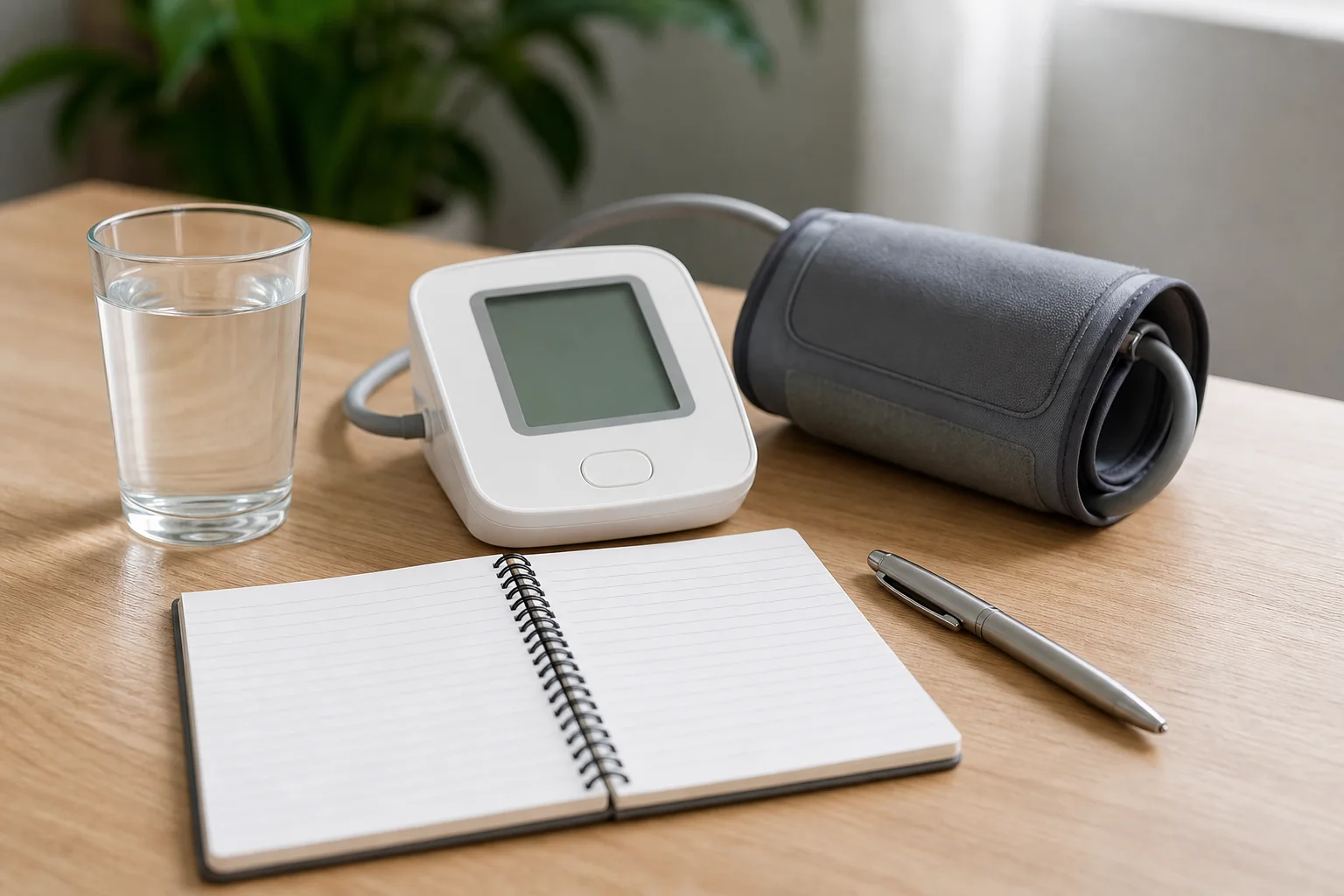
NICE recommends two consecutive seated measurements at least one minute apart, twice daily, when home monitoring is being used to help confirm hypertension: ideally morning and evening for at least four days, preferably seven. Its diagnostic protocol discards the first day’s readings and uses the average of the remaining measurements. That is a formal clinical protocol, not a demand to self-diagnose. A clinician may ask you to use a different schedule depending on pregnancy, medication changes, kidney disease, irregular pulse or other circumstances.
For an ordinary log, write down the date and time, first and second readings, which arm you used, and a short note such as “after five minutes seated,” “headache present,” “missed morning medicine” or “after a night shift.” Do not chase a lower reading by repeating the test again and again. Two careful readings are usually enough for that session unless your clinician has told you otherwise.
Why home and clinic readings may not match
Some people have higher readings in a clinic because of anxiety, often called a white-coat effect. Others have relatively reassuring clinic readings but higher values outside the clinic, sometimes called masked hypertension. That is why a clinician may use home monitoring or a 24-hour ambulatory monitor to clarify the picture. Differences do not mean one setting is “lying”; they are a reason to collect better-quality measurements and assess the whole cardiovascular risk picture.
Irregular heart rhythms can make automated measurement less reliable. NICE specifically notes that an irregular pulse may require manual measurement by a trained professional. If your monitor repeatedly flags an irregular heartbeat, do not use the icon to diagnose an arrhythmia, but mention it when you seek care.
When to arrange routine care
Arrange a non-emergency appointment when carefully taken readings are repeatedly higher than your usual range, when you have a new pattern after starting or changing a medicine, or when you are uncertain whether the device is accurate. Bring the monitor and the full log. This is especially important if you have diabetes, kidney disease, heart disease, a prior stroke, pregnancy, a history of high blood pressure or medicines that can affect blood pressure.
Do not stop a prescribed blood-pressure medicine because a few readings look better, and do not add extra doses because one number looks worse. Many medicines, including non-prescription decongestants, NSAID pain medicines, stimulant products and some supplements, can matter for blood pressure or interact with treatment. A pharmacist or clinician can help review the exact product and your situation.
Frequently asked questions
Should I lie down to lower my blood pressure before measuring again?
For standard home monitoring, use a quiet seated position with back support, feet flat and the arm supported at heart level. Lying down is not the routine technique for an ordinary log unless a clinician has specifically asked for it.
Which is more important: the top or bottom number?
Both numbers matter. A clinician interprets the pair, the pattern over time, your health history and whether readings were obtained correctly. Do not ignore a repeatedly high lower number simply because the upper number seems less concerning.
Can anxiety cause a high reading at home?
Yes. Anxiety and the act of repeatedly checking can temporarily increase readings. That is one reason to use a planned routine, a short rest and two measurements rather than measuring continuously during a stressful moment.
What if the two readings are different?
Write down both. Readings naturally vary. A large, repeated difference is a reason to review technique, cuff fit and the log with a clinician rather than selecting the more reassuring number.
Can I use a wrist monitor?
A validated wrist device may be appropriate when an upper-arm cuff cannot be used, but positioning is more sensitive and should be checked with a clinician. For most people, a validated upper-arm cuff is the straightforward first choice.


