
Heartburn that appears after you lie down can make a manageable daytime symptom feel much bigger at night. Burning behind the breastbone, a sour taste, cough or repeated throat-clearing may interrupt sleep, then leave you tired enough to make the same rushed late-evening choices the next day. The useful question is not merely “what can I take right now?” It is whether the pattern is occasional, what seems to set it off, and whether any symptom suggests that it is not simple reflux at all.
Short answer: Night-time heartburn often becomes more noticeable when a person lies down soon after eating, because gravity is no longer helping keep stomach contents in the stomach. For many people, leaving time between the last meal and bed, raising the upper body with a wedge or bed elevation, and identifying personal triggers can help. Frequent symptoms, trouble swallowing, weight loss, bleeding or chest pain deserve medical assessment rather than repeated self-treatment.
Why heartburn can feel worse after dark
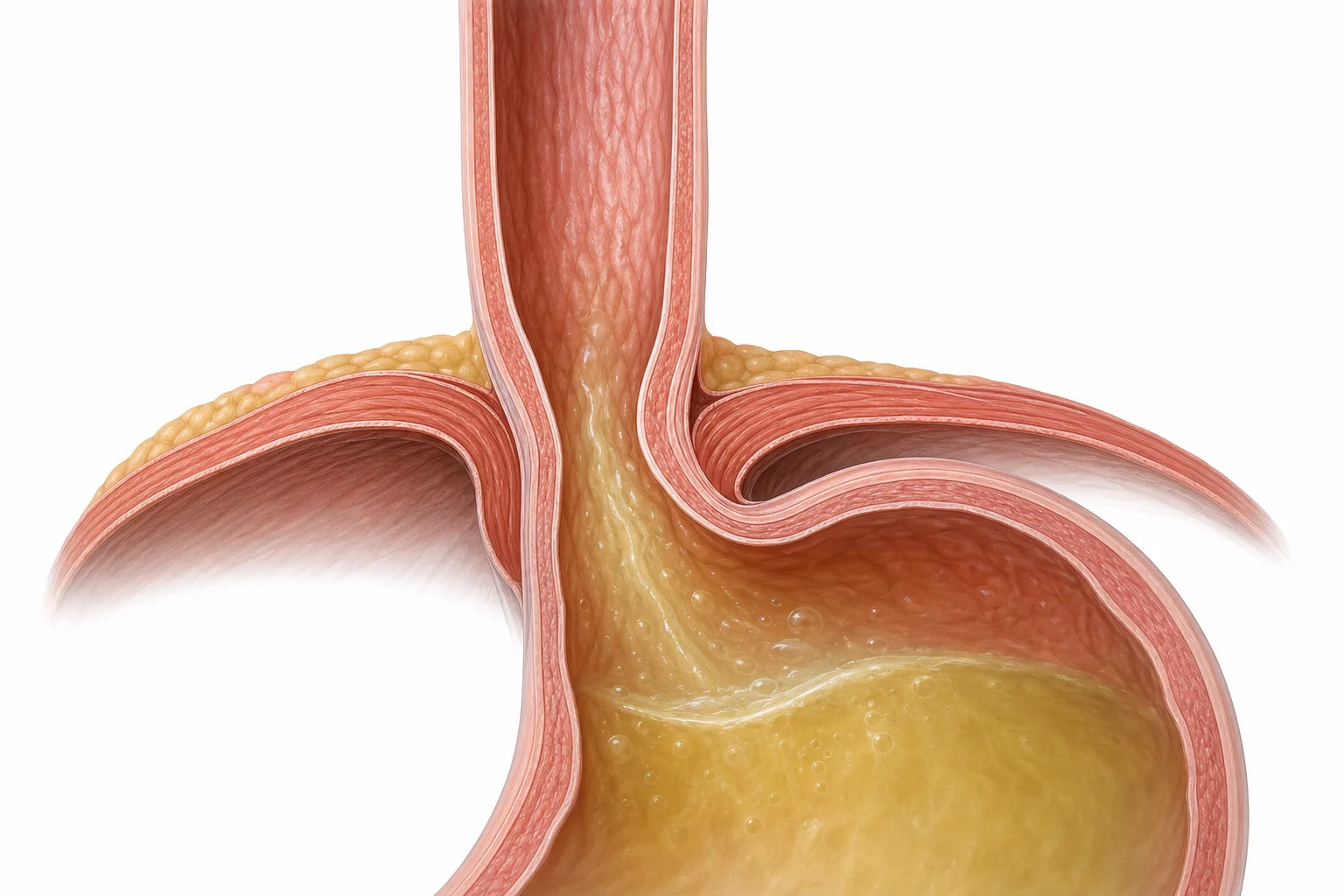
Heartburn is a symptom, not a diagnosis. It usually happens when stomach contents move backward into the oesophagus, the tube from the mouth to the stomach. The oesophagus is not built to tolerate repeated exposure to acid and other stomach contents. Gastroesophageal reflux disease, or GERD, is the term used when reflux produces troublesome symptoms or complications.
Daytime movement and an upright position give gravity a helping hand. After a late meal, lying flat can make it easier for refluxate to reach the oesophagus and stay there longer. A large meal, a high-fat meal, alcohol, smoking, pregnancy, extra pressure around the abdomen and some medicines can contribute in some people. None of those is a universal explanation, and none proves that a particular food “caused” GERD. They are clues to test with a calm, structured approach.
Do not assume chest burning is always reflux
Heartburn can mimic other conditions, and some serious conditions can be mistaken for indigestion. New chest pressure, tightness, heaviness, sweating, nausea, shortness of breath or pain spreading to the arm, jaw, shoulder or back needs urgent medical assessment, especially if it is severe or occurs with exertion. Antacids are not a test for whether chest pain is harmless.
A sensible plan for tonight and the next week
The most reliable changes are usually unglamorous. Rather than changing every food and buying several remedies at once, test one or two measures consistently and observe the pattern. NIDDK guidance recommends allowing at least three hours between eating and lying down for people whose symptoms occur at night or when lying down.
| Step | Why it may help | How to use it safely |
|---|---|---|
| Finish the last meal earlier | Less stomach contents may be available to reflux once you lie down. | Use a regular three-hour buffer where practical. A small necessary snack is different from a large late meal. |
| Raise the upper body | Gravity can reduce the ease with which stomach contents travel upward. | Use a foam wedge that supports the head and upper back, or raise the head end of the bed. Stacking ordinary pillows may bend the body at the waist. |
| Keep evening clothing loose | Tight waistbands can increase abdominal pressure in some people. | This is a low-risk experiment, not a treatment for persistent symptoms. |
| Track timing and symptoms | A pattern is more useful than a long list of “forbidden” foods. | Record meal time, bedtime, symptoms and any remedy for one to two weeks. |
Do not chase a perfect sleeping position if it causes neck, shoulder or back pain. The point is to keep the upper body comfortably supported. If a bed wedge, adjustable bed or elevation is unsafe for your mobility, balance or another medical condition, ask a clinician or occupational therapist what is appropriate for you.
Food triggers are personal, not a moral list
Citrus, tomato, chocolate, coffee, alcohol, mint, spicy foods and high-fat foods are commonly linked with reflux symptoms. That does not mean every person with heartburn must avoid every item forever. Indiscriminate restriction can turn meals into a stressful guessing game and still fail to reveal the real driver: meal size, timing, alcohol, smoking, weight change, pregnancy, a medicine or an underlying condition.
A better experiment is to write down what happened before a bad night. Keep the note brief: the time and size of the meal, drinks, whether you lay down soon afterward, bedtime, symptoms, and what helped. Try changing one variable for several nights. If tomatoes only seem to matter when paired with a late, large, high-fat dinner, the practical target may be timing and meal size rather than tomatoes themselves.

Weight, smoking and pregnancy need their own context
For people who are overweight or have obesity, NIDDK notes that weight loss may reduce GERD symptoms. This is not an instruction to start a crash diet, and it is not a measure of personal blame. Gradual, supported changes are more realistic and safer. Smoking can worsen reflux, and pregnancy can bring reflux symptoms even to someone who has never had them before. During pregnancy, medication choices need individual advice from the antenatal team or a pharmacist rather than a copied internet routine.
Where medicines fit in, and where they do not
Occasional, mild heartburn may respond to an antacid or alginate, which can give short-term relief. NHS guidance notes that these products do not treat the underlying cause and are not intended as a long-term answer when used regularly. They can also interact with other medicines, and some products contain sodium or other ingredients that matter for people with kidney disease, heart failure, high blood pressure or a restricted diet.
H2 blockers and proton pump inhibitors, or PPIs, reduce acid production. They are useful medicines for some people with GERD, but a drug choice is not a substitute for checking alarm symptoms or reviewing frequent symptoms. The ACG guideline recommends taking a PPI before a meal rather than at bedtime for symptom control, but the right medicine, duration and dose depend on the product, the reason for use, other medicines and the person’s health history. Do not increase a dose, combine acid-suppressing products or continue repeated courses without asking a clinician or pharmacist.
Several medicines can also worsen reflux in some people, including some sedatives, certain blood-pressure medicines, some asthma medicines and NSAIDs. Never stop a prescribed medicine on your own because of heartburn. Bring a full list of prescription medicines, over-the-counter products and supplements to the review. If you use ibuprofen or naproxen, see our guide to NSAID duration and safety; these medicines can irritate the upper digestive tract and should not be combined for routine self-treatment.
What a clinician may do for persistent symptoms
Many people with typical reflux symptoms can start with a history, a review of medicines and a trial of treatment rather than immediate testing. NIDDK explains that tests may be considered when symptoms suggest a complication or another condition, or when symptoms do not improve with lifestyle changes and treatment. Depending on the situation, this might include upper endoscopy, reflux monitoring or testing for other explanations.
Bring specific details: when symptoms began, how often they happen, whether food feels stuck, whether you wake coughing or choking, any unintentional weight loss, vomiting, black stools, anemia, regular pain-reliever use, family history and what you have already tried. These details help more than describing every meal you have eaten in the last month.
When to seek medical care
Make a routine appointment if heartburn happens most days, has persisted despite sensible lifestyle changes and pharmacy advice, or is affecting sleep and daily functioning. NHS guidance also advises medical review for symptoms such as food sticking in the throat, frequent vomiting or unintentional weight loss. Trouble or pain with swallowing, persistent hoarseness, unexplained anemia, persistent cough, or reflux that begins later in life deserve attention rather than automatic self-treatment.
Seek urgent care for chest pain or pressure that might be cardiac, vomiting blood or material that looks like coffee grounds, black tarry stools, fainting, severe shortness of breath, or severe persistent abdominal or chest pain. These are not ordinary “reflux nights,” and they should not be managed by taking another antacid at home.
Frequently asked questions
How late is too late to eat if I get heartburn at night?
NIDDK recommends leaving at least three hours between eating and lying down or going to bed when symptoms occur at night. The best schedule still has to fit your health needs, work and medications, so avoid skipping necessary meals to meet a rule perfectly.
Are extra pillows enough for night-time reflux?
Usually not. A wedge that supports the upper body or elevation at the head of the bed is more likely to maintain an incline. A stack of pillows may bend the body at the waist, slide during sleep or increase abdominal pressure.
Should I avoid coffee, chocolate and tomatoes forever?
No universal list works for everyone. These foods are commonly associated with symptoms, but a short diary and one-at-a-time changes are more useful than a permanent blanket ban.
Can heartburn cause a cough at night?
Reflux can be associated with cough, hoarseness and throat symptoms, but these symptoms have many other causes. A persistent or worsening cough needs clinical assessment rather than being assumed to be reflux.
Can I take antacids every night?
Regular need for antacids is a reason to talk with a clinician or pharmacist. They can offer short-term relief, but they do not establish the cause and may interact with other medicines.
Sources reviewed
- NIDDK: Treatment for GER and GERD
- NIDDK: Eating, Diet and Nutrition for GER and GERD
- NIDDK: Diagnosis of GER and GERD
- American College of Gastroenterology: GERD clinical guideline
- American College of Gastroenterology: Acid Reflux / GERD
- NHS: Heartburn and acid reflux
- NHS: Antacids
- Cambridge University Hospitals: dietary and lifestyle advice for GORD