
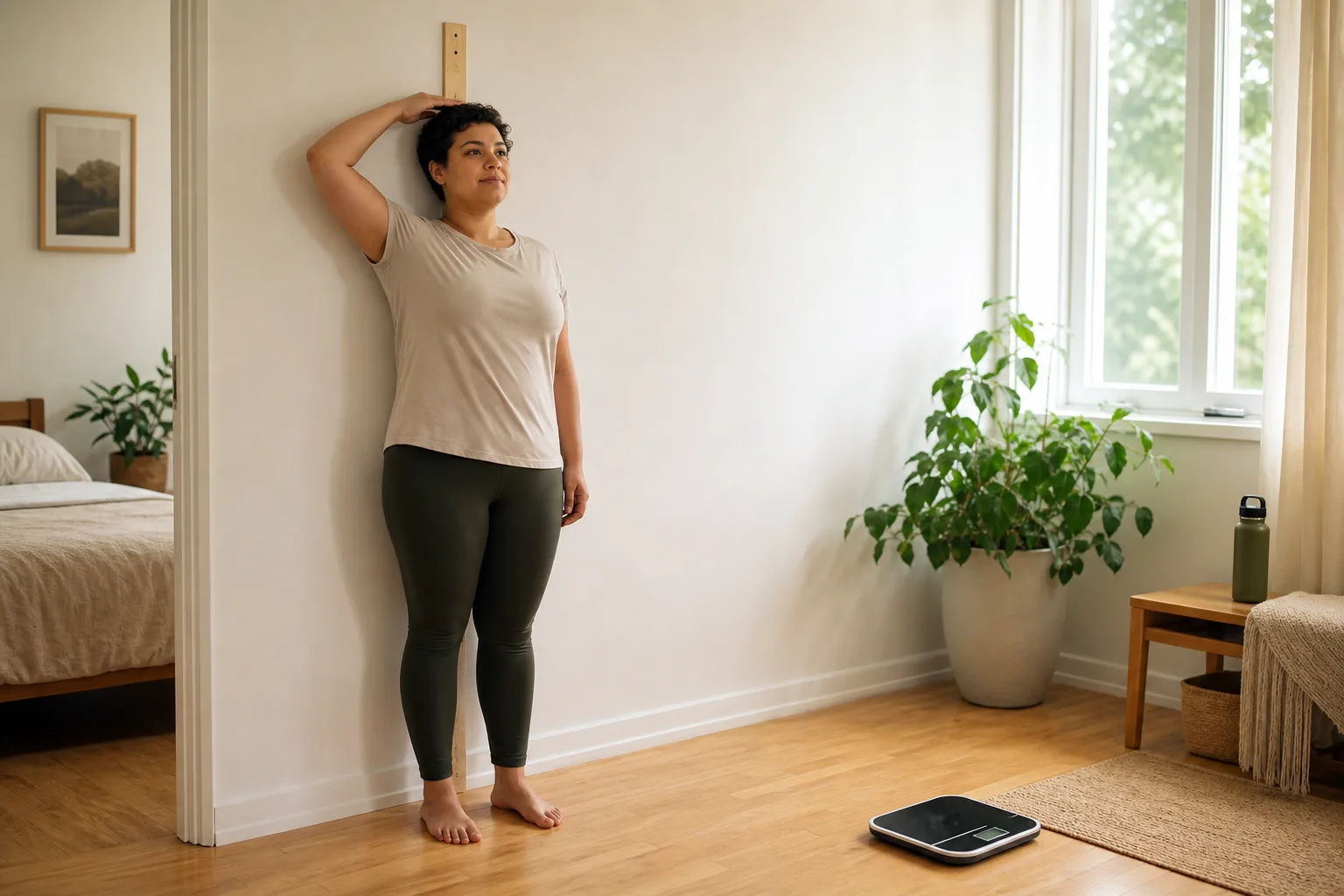
This BMI calculator gives an adult body mass index from height and weight. Choose metric or US customary units, enter the measurements, then see the number and the standard adult category. The calculator is for adults aged 20 and older. It runs in your browser, so the values you enter are not sent to osvilt.com.
Adult BMI calculator
For adults aged 20+. Enter height and weight, then select Calculate BMI.
What BMI measures
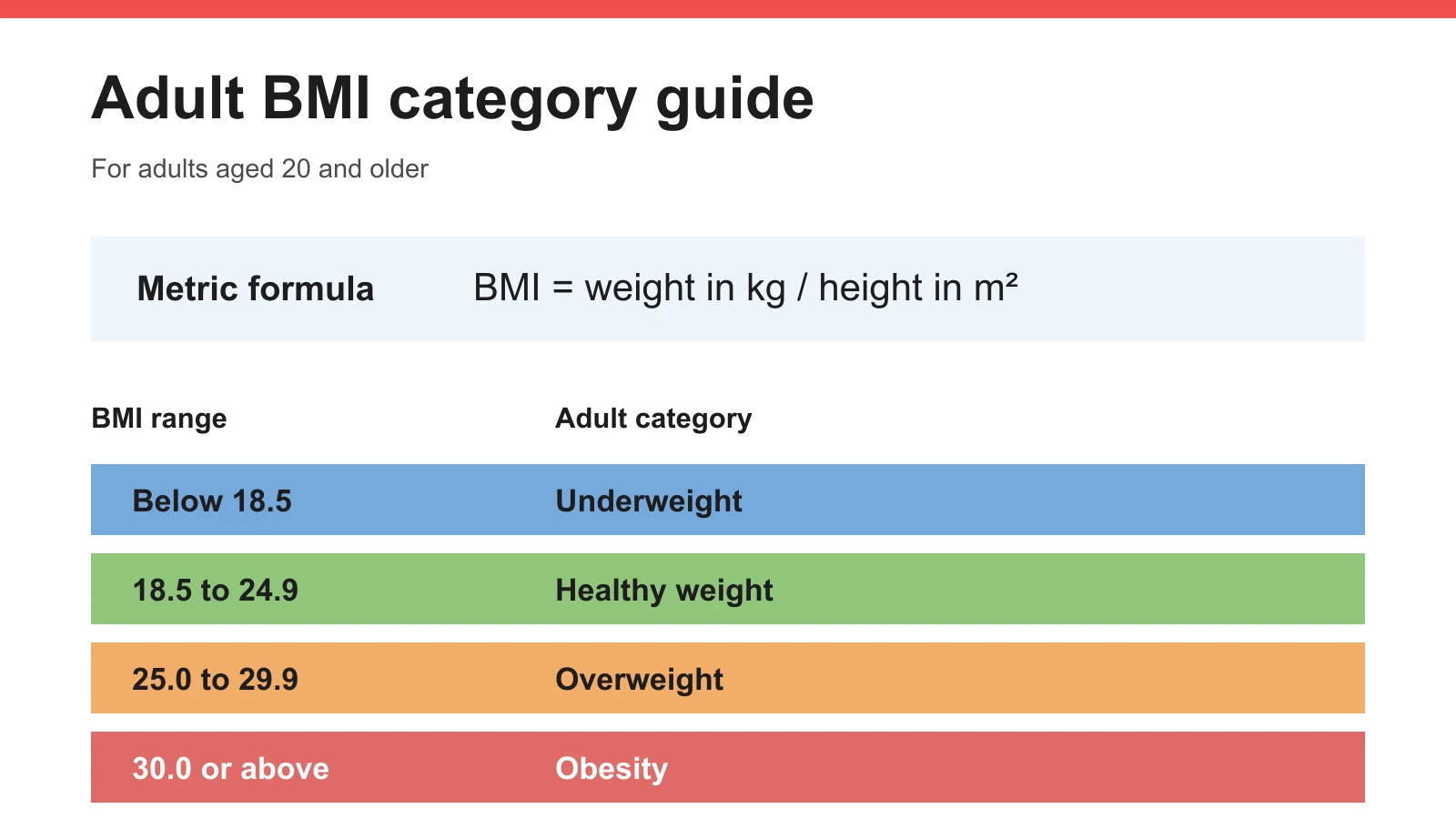
Body mass index is weight adjusted for height. In metric units, the formula is weight in kilograms divided by height in metres squared. The US customary formula uses weight in pounds divided by height in inches squared, multiplied by 703. A BMI number gives a consistent first screen for weight categories in adults.
It cannot measure body fat directly, describe where body fat is carried, or show blood pressure, blood sugar, fitness, medicines, symptoms or medical history. Clinicians use BMI with other information when they assess health risk. A single result also says little about change over time. A measured weight trend may be more useful than one reading when there has been an unplanned gain or loss.
Adult BMI categories
| BMI | Standard adult category | How to use the result |
|---|---|---|
| Below 18.5 | Underweight | Consider a clinical conversation when weight loss is unplanned, appetite is poor, or there are symptoms such as fatigue, digestive trouble or ongoing illness. |
| 18.5 to 24.9 | Healthy weight | This category still leaves out body composition, waist size, blood pressure and many parts of health. |
| 25.0 to 29.9 | Overweight | A clinician can place the result alongside waist measurement, blood pressure, sleep, medicines and family history. |
| 30.0 or above | Obesity | Health risk and support needs vary. A clinician can discuss screening, practical treatment choices and weight-neutral goals where appropriate. |
These are the standard categories for adults aged 20 and older used by the CDC and NHLBI. They describe a screening classification. They do not tell someone whether they have a disease or what treatment they need.
Where BMI has limits
BMI has useful limits. It cannot separate muscle from body fat, so a very muscular person can have a higher BMI without a high level of body fat. It can also miss health concerns in someone whose BMI falls within the reference range. Age, body composition, fat distribution, pregnancy, disability, ethnicity, medicines and medical history can change how a clinician interprets the number.
Waist circumference, blood pressure, blood tests, sleep quality, physical symptoms and day-to-day function may add information. There is no need to turn a calculator result into a verdict about appearance, effort or character. The number can start a more specific conversation when it raises a question.
BMI for children and teens uses percentiles
This calculator is intentionally limited to adults. Children and teenagers aged 2 to 19 need BMI-for-age percentiles that use age and sex, because growth changes the meaning of the same BMI number. Use the CDC Child and Teen BMI Calculator or discuss growth with a pediatric clinician. Adult cutoffs can give a misleading answer for a growing child.
What to do with a BMI result
Use the result as one piece of information. A routine visit can be a good time to raise a question about weight change, sleep, activity limits, eating concerns, medicines, blood pressure or family history. Seek medical advice sooner for unintentional weight loss, a rapid unexplained change, fainting, persistent vomiting, trouble eating, severe weakness, or symptoms that are affecting daily life.

A clinician may look for causes of a change, review medicines, measure waist circumference, check blood pressure, or suggest laboratory tests based on the full picture. The right next step varies with the person and their history. A calculator cannot choose it.
Frequently asked questions
Does BMI differ for men and women?
The standard adult categories use the same cutoffs for men and women aged 20 and older. Body composition can differ, which is one reason BMI is used as a screening measure alongside other information.
Can I calculate BMI during pregnancy?
The arithmetic still works, yet pregnancy-related weight changes need individual interpretation. A prenatal clinician can advise on weight monitoring and health goals during pregnancy.
How accurate are home measurements?
Home measurements can give a useful estimate when height and weight are measured consistently. Shoes, heavy clothing, an uneven floor and different times of day can shift the result. Repeat measurements under similar conditions when tracking a trend.
Sources reviewed
- CDC: Calculating BMI
- CDC: Adult BMI calculator
- NHLBI: Overweight and obesity symptoms and diagnosis
- CDC: Child and Teen BMI Calculator
- CDC: BMI considerations for practitioners


