
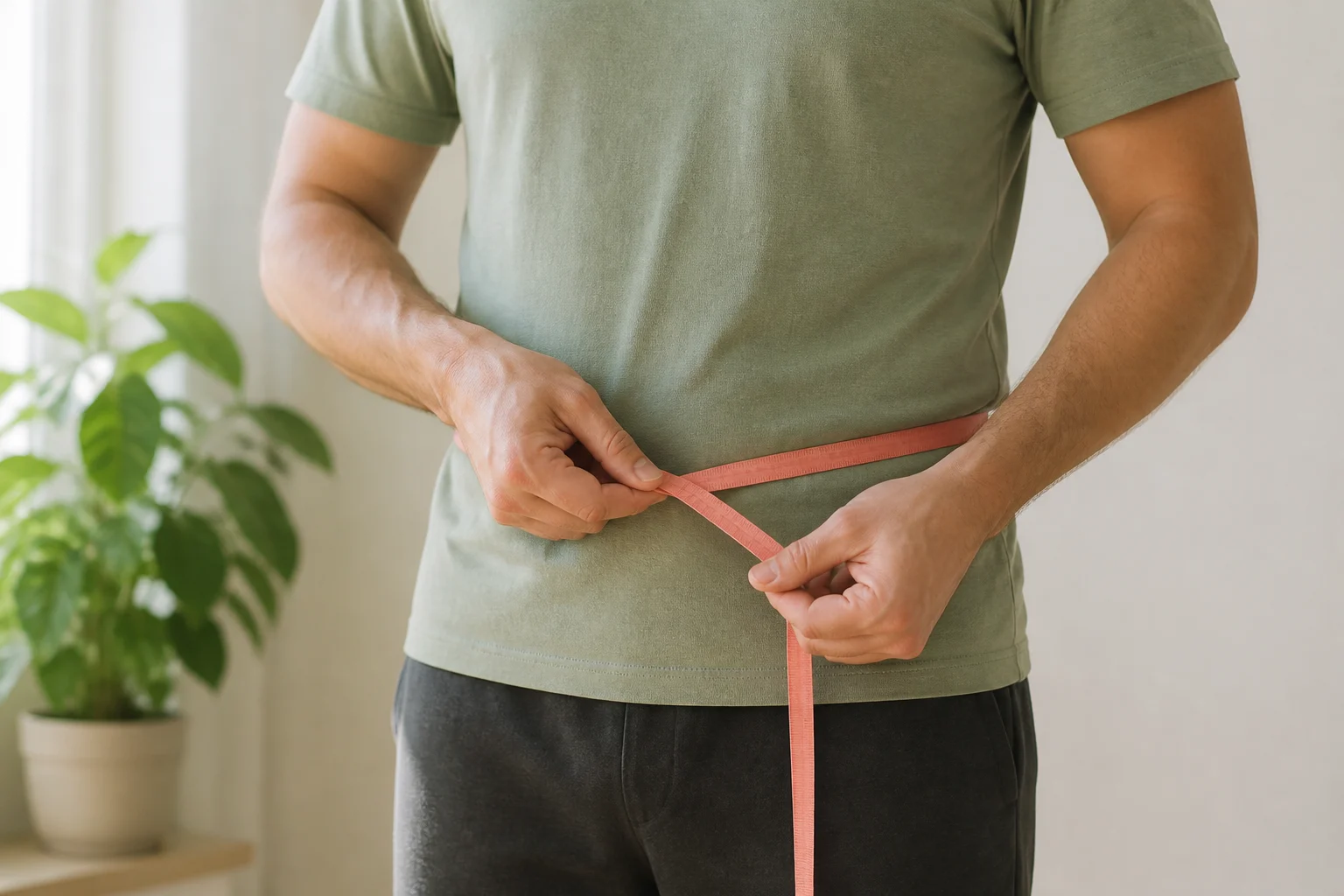
A tape measure cannot give a medical verdict. It can offer a useful clue. This waist-to-height ratio calculator compares your waist measurement with your height, then shows whether your waist is less than half your height. The calculation is quick. Measuring well takes a little more care than people expect.
This page is for adults. Choose centimetres or inches, enter both measurements, and calculate the ratio in your browser. Your numbers stay on your device. The result is a screening clue to discuss alongside BMI, blood pressure, blood tests, symptoms and medical history. It does not diagnose a health condition.
Waist-to-height ratio calculator
For adults. Measure your natural waist and use the same unit for waist and height.
What waist-to-height ratio measures
Waist-to-height ratio divides waist circumference by height. A waist of 80 cm and a height of 170 cm gives 0.47. The arithmetic stays exactly the same in inches: 32 inches divided by 67 inches also gives about 0.48. Keeping the units identical matters; centimetres divided by inches will produce nonsense with impressive-looking decimals.
The ratio is used as a simple way to look at central adiposity, meaning fat carried around the abdomen. NICE advises healthcare professionals to consider it in adults with a BMI below 35 kg/m2. Its public-facing message is easy to remember: keep your waist to less than half your height. Easy to remember is useful. It still needs context.
BMI and waist measurements answer different questions. BMI compares weight with height. A waist measurement adds information about where weight is carried. The American Heart Association describes waist circumference and waist-to-height ratio as measures that can add to a broader assessment; no one number captures blood pressure, cholesterol, glucose, sleep, physical function or a person’s full health history.
How to measure your waist at home
There is no prize for pulling the tape tight. A reliable measurement comes from a calm, repeatable method. NICE describes measuring at the midpoint between the bottom of the ribs and the top of the hips, usually just above the belly button. The CDC gives a similar practical instruction: place the tape just above the hip bones, after breathing out.
- Use a flexible tape measure. Measure against bare skin or thin clothing where possible.
- Stand upright with your feet together. Let your abdomen rest in its usual position.
- Find the midpoint between the lowest rib and the top of the hip bone. For many adults, it sits a little above the navel.
- Wrap the tape level around the waist. It should touch the skin without digging in or hanging loose.
- Breathe out naturally, then read the number. Do not hold your breath or pull your stomach in.
- Write down the date and unit. Repeat under similar conditions when you want to track change.
A bathroom mirror can help confirm that the tape has not sloped upward at the back. This small detail shifts a measurement more often than people think. If two readings differ, take a third and use the average. A clinician can measure your waist during a visit when you are unsure of the landmark or need a result interpreted alongside other checks.

How to read an adult result
NICE uses the following adult ranges for waist-to-height ratio in people with a BMI below 35 kg/m2. They signal possible health risk at a population level. They do not assign a diagnosis, a diet, an exercise plan or a medication.
| Waist-to-height ratio | NICE adult interpretation | A sensible next thought |
|---|---|---|
| Below 0.50 | Below the 0.5 threshold | Keep the result in perspective. BMI, blood pressure, symptoms and change over time may still matter. |
| 0.50 to 0.59 | Increased health-risk sign | Consider discussing the result at a routine clinical visit, particularly with high blood pressure, raised blood sugar, sleep concerns or a family history of cardiometabolic disease. |
| 0.60 or higher | Further increased health-risk sign | Arrange a clinical conversation. A clinician can assess the whole picture and decide which checks are useful. |
For example, a 96.5 cm waist and 170 cm height gives 0.57. That example appears in NICE guidance. It falls in the 0.50 to 0.59 range. The number can prompt a conversation; it cannot explain why a particular person has that measurement or predict what will happen next.
Keep the measurement honest. Waist size can change during the day with meals, bloating, constipation, fluid retention, menstruation and ordinary measurement error. Look for a trend measured the same way, rather than treating a single Tuesday evening number as a life report card.
Who should not use this calculator
This calculator is deliberately narrow. The NHS says its waist-to-height assessment should not be used during pregnancy, by adults with a BMI over 35 kg/m2, or by people with a diagnosed or suspected eating disorder, a growth disorder, or a condition that affects height. Children and young people need an age-appropriate assessment. The NHS calculator also asks younger users to complete an assessment with a parent or carer.
If you are recovering from surgery, have abdominal swelling, are retaining fluid, use mobility equipment, or have a body shape affected by a health condition, a standard tape measurement may be difficult to interpret. There is no need to force the number. Ask a clinician which measurement, if any, is useful for you.
People with a BMI of 35 kg/m2 or above deserve a fuller clinical assessment rather than an extra self-screen. That is a boundary in the NHS tool, not a statement about a person’s worth, effort or ability to improve health.
What to do with your result
A ratio above 0.50 can be a useful reason to bring a few practical questions to a routine visit: Has your waist changed recently? Is your blood pressure known? Is there a history of type 2 diabetes, heart disease or sleep apnea in the family? Are medicines, pain, low mood, menopause, shift work or limited mobility making everyday habits harder? Those details give a clinician far more to work with than a ratio alone.
Seek medical advice promptly for rapid unexplained abdominal enlargement, severe or persistent abdominal pain, shortness of breath, fainting, vomiting blood, black stools, or unintentional weight loss. A waist calculator has no role in sorting urgent symptoms. Get help for the symptom itself.
For a simple baseline, record your height, waist measurement, date and time. Bring the note to a visit if the result worries you. It may be paired with BMI, blood pressure and appropriate laboratory tests. Small, repeatable measurements beat memory here. Memory is a terrible tape measure.
Frequently asked questions
What is a healthy waist-to-height ratio?
For adults with a BMI below 35 kg/m2, NICE describes a ratio below 0.50 as below the threshold it uses for increased health risk. This is a screening interpretation. Health also depends on many other factors.
Is waist-to-height ratio better than BMI?
They provide different information. BMI compares weight and height, while waist-to-height ratio focuses on abdominal size relative to height. Guidance commonly uses BMI with waist information rather than replacing every other measure with one calculation.
Can I use my trouser size for this calculator?
No. Clothing sizes vary between brands, styles and countries. Use a flexible tape around the body at the recommended location for a measurement that can be repeated.
How often should I measure my waist?
There is no universal schedule. Measuring under similar conditions every few weeks may be enough when tracking a planned change. More frequent checking can become unhelpful or distressing for some people. A clinician can suggest an approach that fits your situation.
Sources reviewed
- NHS: Calculate your waist-to-height ratio
- NICE NG246: Identifying and assessing overweight, obesity and central adiposity
- NICE NG246: Rationale and impact
- CDC: Healthy weight and growth
- American Heart Association: Assessing adiposity


