There is no definite answer to this question. On the one hand, mother’s milk is a unique biological product, the composition of which cannot be repeated by any of the mixtures.
However, there are a number of good reasons for feeding your baby artificially.
If there are no medical contraindications and psychological stress, the best option for the full development of the child is breastfeeding. But do not forget that the emotional component is much more important. A happy mom is a happy baby, so the choice is yours.
These include:
- The baby was born prematurely. If the weight of the crumbs is less than one and a half kilograms, attachment to the chest is not recommended for medical contraindications.
- Development defects in a newborn. A child cannot capture and suckle a breast due to the improper structure of the maxillofacial apparatus. With heart disease, hepatitis B should be excluded.
- Features of the structure of the nipple of the mother. A flat or hollow nipple makes the natural feeding process impossible. In this case, special silicone breast pads that imitate the nipple can help. However, not every kid likes them.
- Severe birth injury or a high degree of choking a baby. In this situation, the child will be in the intensive care unit until the state of health improves.
- The mother has a positive HIV status (the disease is transmitted to the baby through milk). The same goes for open tuberculosis.
- Malignant tumors in the mammary gland. Breastfeeding with a diagnosis of cancer threatens with serious complications.
There are other, less compelling reasons when a woman refuses to breastfeed:
- Fear of spoiling the aesthetically pleasing appearance of the breast.
- Discomfort and discomfort during breastfeeding.
- Extreme constraint. Some women feel ashamed while breastfeeding in public places.
Feeding a baby is one of the most important stages in the full development of a person. Parents should take food choices seriously in their first year of life. It is during this period that immunity and the work of the gastrointestinal tract are formed. Not only the future health of the child, but also the emotional state of the mother, whose importance cannot be underestimated, depends on a competent approach to feeding. There are two main types of feeding: breastfeeding and artificial. Features, differences and what is better to choose, consider below.
Breastfeeding (GV)
Breast milk is a combination of essential nutrients, biologically active substances and vitamins. It enters the body of a newborn by resorption of the mammary gland. Milk has a beneficial effect on the fragile microflora of the children’s intestines, has a high degree of digestibility, has an optimal temperature, which is important for proper feeding.

As soon as the baby is born, it is immediately applied to the mother’s breast. The first feeding lasts an average of 1 minute, sometimes less. This is done in order to establish the process of lactation and keep it for a long time. In addition, with the first drops of colostrum that enter the body, the newborn receives immune protection. Colostrum contains a huge amount of antibodies that provide the baby with resistance to various infections.
The first full-fledged feeding occurs a few hours after the birth, when the mother and baby rested from the difficult process of labor. At this time, the first difficulties are encountered : it is necessary to choose a comfortable position and help the newborn to properly take the mammary gland. The child should be as close to the chest as possible, capturing not only the nipple, but also the areola around it. The skin of the chest should not interfere with the respiratory process, the nose remains free. The most convenient feeding position is selected individually.
HB is the best that a mother can give her child in the first six months of his life. Breast milk acts not only as a shield of the immune system, but also forms a special emotional connection between mother and baby.
Artificial Feeding (IV)
A woman can not always breast-feed a baby, due to various circumstances. Then, artificial mixtures come to the aid of her, the composition of which is as close as possible to breast milk. The market offers a wide range of infant formula, adapted to the individual characteristics of the development of the child.
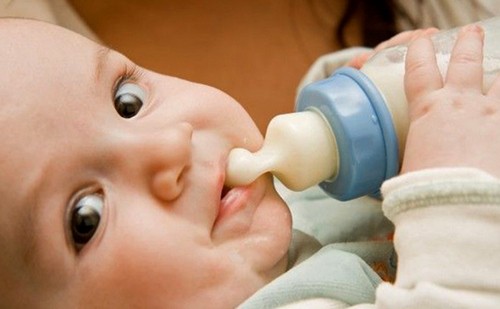
Before buying a mixture, you should consult with your local pediatrician. The doctor will give general recommendations and advise the most suitable type of artificial mixture. While in a store or pharmacy, you need to carefully study the composition, expiration date, and also check the integrity of the product packaging.
After the baby first tried the mixture, it is necessary to closely monitor the state of his health. The appearance of symptoms such as: rash, vomiting, diarrhea, indicates that the mixture is better to replace. With the right artificial feeding, the baby feels well, the weight gain complies with the standards. The skin of the baby remains clean, bowel movement occurs regularly.